




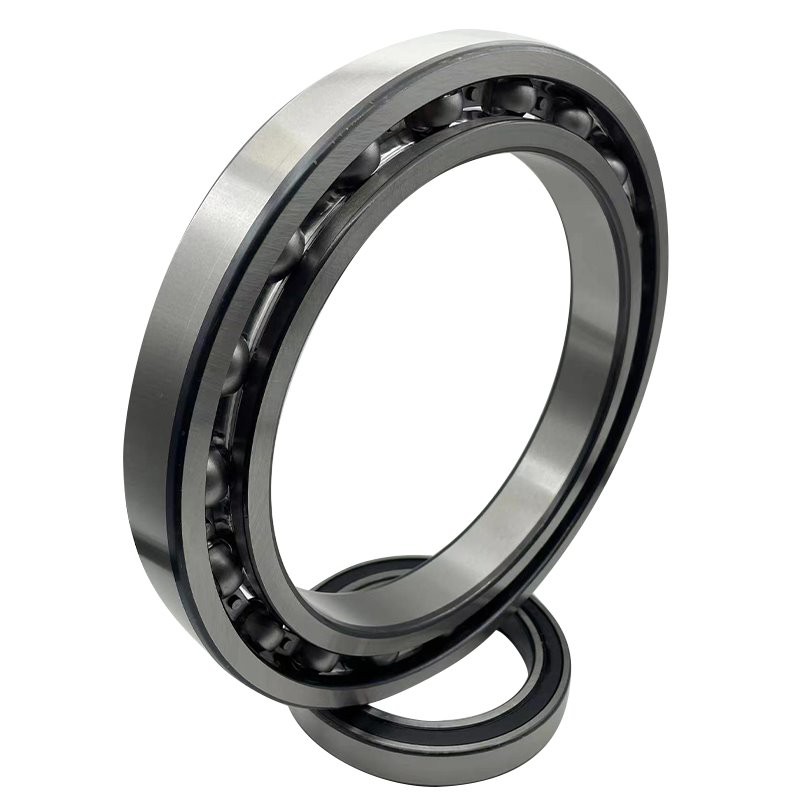
Thin Wall Bearings
Linqing Tuocheng Bearing Co., Ltd: You Professional Thin Wall Bearings Manufacturer!
Linqing Tuocheng Bearing Co., Ltd. was established in June 2002 and is located in Panzhuang Town, Linqing City, Liaocheng City, Shandong Province. It has been committed to the research and development, production, sales and service of high-quality bearings. Each bearing produced by the company is developed from the requirements of safety, high temperature resistance and wear resistance. The company's products are exported to more than a dozen countries such as Russia, Lithuania, Iran, and Dubai.
Rich Product Variety
Our company can produce self-aligning ball bearings, Spherical Roller Bearing CA Series, Spherical Roller Bearing MA Series, Spherical Roller CC Series and Spherical Roller Bearing MB Series
Wide Range of Product Uses
Our tapered roller bearings are often used in applications where there is a requirement for heavy-duty operation. These include earth moving equipment, mining machines, industrial machinery, construction vehicles, marine vessels, wind turbines, and so on.
Quality Guaranteed
Our tapered roller bearings are rigorously tested to ensure durability and long-lasting performance.With our advanced technology and manufacturing equipment,They are developed from several safety, high temperature resistance, wear resistance and other requirements.
Leading Service
We have many years of industry experience and a comprehensive production management, quality supervision, sales service operation system. Whether you want to purchase spontaneous tiles or reflective paint, simply send your requirements via email and we can customize the product for you.
Related Product Introduction

Product Features In order to obtain low friction torque, high rigidity, and good rotation accuracy of the bearing, steel balls with small outer diameters are used. The use of hollow shafts ensures light weight and space for wiring. Thin-walled bearings realize an extremely thin bearing section

Deep groove ball bearings are the most widely used bearing type and are particularly versatile. They have low friction and are optimized for low noise and low vibration which enables high rotational speeds.

Slewing bearing is a type of rotary rolling bearing used to support devices with heavy loads but slow or oscillating speeds, such as cranes, wind turbines, or material handling fixtures. A slewing bearing consists of an inner ring and an outer ring, with one ring typically containing a gear. It is a large bearing that can withstand comprehensive loads, and can simultaneously withstand large axial, radial loads and overturning moments.

The backing bearing is a multi column cylindrical roller bearing, which requires very high precision, especially the cross-sectional height (T value) from the inner diameter to the outer diameter after eliminating radial clearance. On each shaft, the T value is controlled within 0.005mm, which requires high precision of the bearing parts.

Thrust ball bearings are designed to take axial (thrust) loads at high speeds, but they cannot handle any radial loads. These bearings feature bearing washers with raceway grooves in which the balls move.

Product Features In order to obtain low friction torque, high rigidity, and good rotation accuracy of the bearing, steel balls with small outer diameters are used. The use of hollow shafts ensures light weight and space for wiring.

The outer ring of the roller bearing adopts a full complement cylindrical roller bearing with a thick outer ring wall. The outer diameter surface of the roller has a cylindrical shape and an arc shape, which can be designed to match the raceway surface according to the application.

According to whether the ring has ribs or not, it can be divided into single row cylindrical roller bearings such as NU, NJ, NUP, N, NF, and double row cylindrical roller bearings such as NNU and NN. The bearing is a structure in which the inner ring and the outer ring can be separated.

Cylindrical rollers and raceways are linear contact bearings. Load capacity, mainly bear radial load. The friction between the rolling element and the rib of the ring is small, which is suitable for high-speed rotation.
What is Thin Wall Bearings
Thin walled bearings refer to bearings with an inner diameter to outer diameter ratio less than a specified value. The ratio of the outer diameter to the inner diameter of the bearing is less than 1.25, which is called a thin-walled ball bearing. This indicates that the outer diameter to inner diameter value of the bearing is very small, and the bearing wall is very thin, so it is called a thin-walled bearing.
Features of Thin Wall Bearings
High Precision
Thin section bearings are made with great care, ensuring they are incredibly accurate. This accuracy is crucial for tasks where exact measurements and positioning are very important.
01
Reduced Friction
These bearings are designed to move smoothly with very little resistance. This is essential for important tasks like medical devices and precise machinery.
02
Steady Rotation
Thin section bearings rotate consistently without wobbling. This is crucial in tasks where any shaking or wobbling would harm precision and quality.
03
Reliable Performance
These bearings keep working well over time and don't wear out quickly. This reliability is very important in situations where even small problems can cause big issues.
04
Compact and Light
Thin section bearings are thin and lightweight, which is useful when space is tight or weight matters a lot, like in medical devices and aerospace technology.
05
Type of Thin Wall Bearings
Deep Groove Ball Bearings (C)
FAG Generation C deep groove ball bearings always give you all-important advantage. The improved design guarantees optimum results in a broad range of applications. Longer life, less noise, lower friction – whatever you need, FAG Generation C deep groove ball bearings deliver peak performance. It has less noise thanks to the improved ball quality, optimized surfaces and improved cage. It has improved osculation and even lower friction, thanks to optimization of roundness, waviness, surface roughness as well as the cage, an even smoother raceway, and more precise manufacturing tolerances.
Four-point Contact Bearings (X)
The X-Type 4-Point Contact Bearing is a single row ball bearing. This bearing can withstand moment loading. The X-Type bearings have been created using a gothic archway. The gothic archway allows for moment and reversing axial loads to be accepted. X-Type bearings are not an ideal solution for radial loads or combined radial and thrust loads. It can be used in many areas including antenna mounts, bottling equipment, blow out protectors, camera mounts, converting equipment, X-ray equipment, food processing equipment and gear boxes.
Angular Contact Ball Bearings (E)
Angular contact ball bearings in the E series are specially designed to meet the performance requirements of high-speed precision applications. They provide high reliability, superior accuracy and system rigidity for applications such as high-speed machining centres, milling machines, internal grinding machines and woodworking machines.The bearings have very high speed capability, high degree of stiffness, relatively high load carrying capacity, extended bearing service life, low heat generation and compact cross section.
How to Choose Thin Wall Bearings
Basic selection
Select the basic type, tolerance level, and clearance of thin-walled bearings based on the working conditions of the bearings, including load direction and load type, speed, lubrication method, coaxiality requirements, positioning or non positioning, installation and maintenance environment, environmental temperature, etc.
Calculation
Based on the working conditions, stress conditions, and service life requirements of thin-walled bearings, determine the bearing model through calculation, or select the bearing model according to usage requirements, and then verify the service life.
Verification
Verify the rated load and ultimate speed of the selected bearing.The main considerations for selecting thin-walled bearings are the maximum speed, required accurate lifespan, and load capacity, while other factors help determine the final solution for thin-walled bearing type, structure, size, tolerance level, and clearance requirements.
Radial Direction
When the load is mainly in the radial direction, radial bearings can also support limited axial and reverse loads. For this type, standard series bearings are usually the best choice.
When the thrust and axial load are large, angular contact bearings can be used. These bearings, when used as twin bearings (matching sets), can improve load capacity and stiffness, and enhance rotational accuracy.
When it comes to 4-point contact bearings, they have a unique raceway design that allows one bearing to withstand radial, thrust, and overturning torque loads. From a cross-sectional perspective, the raceway appears as a Gothic arch rather than a true radius, forming four contact points with the ball and raceway. Designers can choose a 4-point contact bearing arrangement instead of two angular contact bearings. This can save space and weight.
To Save Space
The thin section bearings have a smaller width, making them suitable for applications where space is at a premium. Compared to traditional bearings, thin section bearings take up less space, helping to reduce the overall size and weight of the equipment.The thin section bearings' most celebrated feature is their capacity to save space without compromising performance. This attribute is particularly valuable in applications with confined spatial constraints, where every millimeter matters.
To Improve Performance
Although the dimensions of thin section bearings are smaller, their performance and load capacity are comparable to traditional bearings. This means that in applications where high performance is required, thin section bearings can provide a reliable solution.
To Simplify Design
The slim dimensions and simple structure of thin section bearings make them easy to design into systems, reducing the complexity and cost of assembly and maintenance. This makes it easier for engineers to integrate thin section bearings into a wide range of applications.
To Reduce Friction
Since thin section bearings have a smaller surface area, they generate less friction during operation. This helps to improve the efficiency and reduce the energy consumption of the equipment.
To Withstand Harsh Environments
The sealed design of thin section bearings helps to protect them from contaminants and moisture, extending the life of the bearings. This makes thin section bearings more suitable for applications in harsh environments.
Installation of Thin Wall Bearings
Put the Inner Ring and Holder into the Tray
At the beginning of installing thin-walled bearings, the inner ring and cage of the bearing should be removed using the correct method. During the removal process, try not to come into contact with dust or rolling. After removal, the inner ring and cage should be placed on the tray in order according to regulations.
Place Steel Balls
After placing the inner ring and cage on the tray, slowly insert the steel balls into the pockets of the cage, taking care not to be impatient. Place them one by one, and then support them with the tray to ensure that the steel balls do not fall out of the pockets.
Insert the Taper Guide Block
Slowly press the taper guide block into the outer ring hole, gradually expanding the outer ring, and gradually aligning the cylindrical part of the taper guide block with the upper end face of the outer ring. The purpose of doing this is to ensure that subsequent operations can proceed normally, because the installation of thin-walled bearings is a step-by-step process of interlocking each other.
Adjust Position
Adjust the taper guide block and outer ring position according to the required medication requirements to ensure good contact between the outer ring and the upper section of the support ring. Only by treating the contact surfaces at both ends well can the thin-walled bearing operate smoothly in the later stage and reduce the occurrence of bearing failures and other problems.
Install the Bearing Component into the Taper Guide Block
Slowly place the small cylindrical part under the installed bearing assembly tray into the groove above the tapered guide block to ensure good contact between the two. Then insert the small cylindrical part of the press fit block into the inner bore of the inner ring.
Apply Pressure to Complete Installation
Apply axial force to the press fit block, and press the inner ring, cage, and steel ball into the outer ring to complete the installation of the thin-walled bearing. This step is also an important step in the installation of thin-walled bearings. When applying pressure, it is important to apply even force to protect the bearings and avoid wasting resources.
Maintenance of Thin Wall Bearings

Regular Inspection and Cleaning
Regular inspection of the operating status of thin-walled bearings is the foundation for ensuring their normal operation. The appearance of the bearings should be checked for any abnormal conditions such as wear and corrosion. In addition, regularly clean the shaft Bearing can prevent the accumulation of dust and impurities, and maintain the normal operation of bearings. Special cleaning agents and lint free cloths should be used during cleaning to avoid secondary contamination of the bearings.
Lubrication and Maintenance
Lubrication is the most critical part of maintaining thin-walled bearings. Proper lubrication can reduce friction and wear of bearings, extending their service life. Should be tailored to different work environments and
Load conditions, select appropriate lubricant types, and regularly replenish or replace them. Be careful not to use too much lubricant to avoid poor lubrication and bearing overheating.
Temperature Monitoring
During the operation of thin-walled bearings, temperature is one of the important indicators reflecting their working status. Excessive temperature may indicate poor lubrication or internal wear of bearings
Check and handle it promptly. Temperature sensors can be installed to monitor the temperature changes of bearings in real time, ensuring that they operate within the normal range.
Load Management
Reasonable load management is crucial for the long-term stable operation of thin-walled bearings. According to the design parameters of the equipment, it is necessary to avoid the bearings from being overloaded or biased for a long time.
Resulting in premature failure of bearings, while eccentric load can cause uneven bearing force on the shaft, affecting its service life. Regularly check the load condition of the equipment to ensure it operates within the design range.
Anti Corrosion Treatment
Thin walled bearings are prone to rusting during use, especially in humid or corrosive environments. Effective anti-corrosion measures should be taken, such as surface coating with anti rust oil or using anti-corrosion agents.
Rust agent to protect bearings from corrosion. In addition, when storing bearings, they should be kept dry and avoid contact with water or other corrosive substances.
Vibration Monitoring
Vibration monitoring is an important means of preventing thin-walled bearing failures. By installing vibration sensors, it is possible to monitor the vibration of bearings in real time, detect and handle abnormalities in a timely manner. Too large
The vibration may indicate a problem with the bearing, such as wear on the inner and outer rings, damage to the rolling elements, etc. It should be stopped for inspection in a timely manner to avoid greater losses.
The maintenance and upkeep of thin-walled bearings are key to ensuring their efficient operation and extending their service life. Through regular inspection and cleaning, lubrication and maintenance, temperature monitoring, load management, and prevention.The steps of corrosion treatment and vibration monitoring can effectively prevent bearing failures and ensure the stable operation of the equipment. Therefore, enterprises should attach great importance to the maintenance and upkeep of thin-walled bearings, and formulate.A scientific maintenance plan ensures the reliability and stability of production equipment.
Application of Thin Wall Bearings
Application of Thin walled bearings are a type of bearing product that is small in size, light in weight, compact in structure, and stable in performance. They are widely used in precision machinery, aerospace, automotive, robotics, and other fields. Thin walled bearings are widely used in aerospace, automotive industry, medical equipment, robotics technology, and high-speed railways due to their characteristics of lightweight, compactness, high efficiency, high speed, long life, and reliability. The structural characteristics of thin-walled bearings include thin-walled structure, precision construction, and light load. In addition, thin-walled bearings also have advantages such as saving space, improving performance, simplifying design, reducing friction, and withstanding harsh environments.
Our certificate


Frequently Asked Questions
Hot Tags: thin wall bearings, China thin wall bearings manufacturers, suppliers, factory, spring loaded ball bearing, 16mm od bearing, four row taper roller bearing, 40mm ball bearings, angular contact thrust ball bearing, bearing inner diameter 10mm
Previous
Backing BearingYou Might Also Like


Send Inquiry